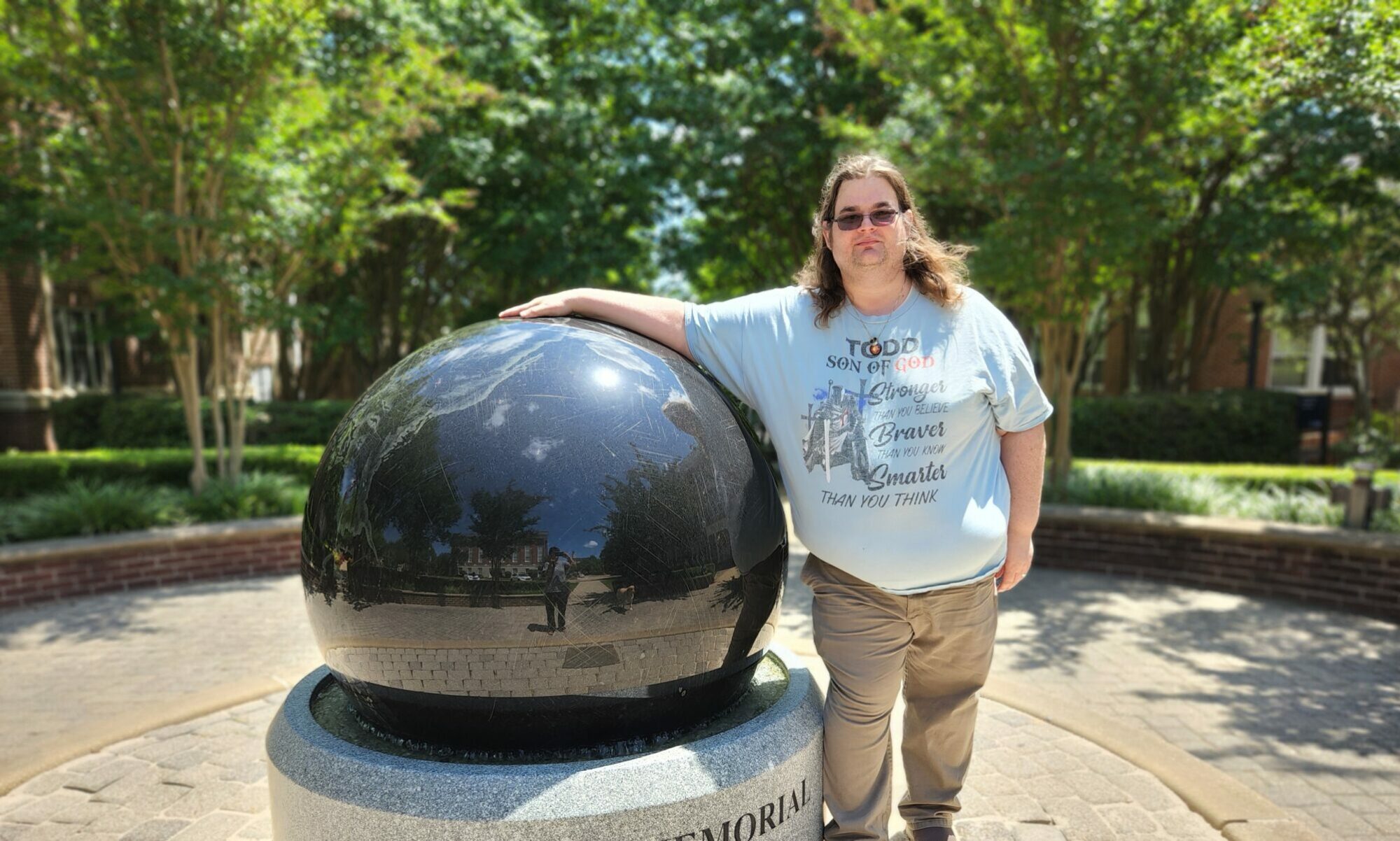

Twenty-three years of simulation theory, two Ricks, two Altoonas, a Russian Blue cat, artificial intelligence, and one rat at the end of a cliff.
By Todd
In the Beginning, There Was a Rat
I have a confession.
After more than two decades of studying simulation theory, holographic reality, spiritual symbolism, and the strange coincidences that seem to follow me around, I believe my greatest spiritual failure might have involved something ridiculously simple.
I never watched Guy Ritchie’s The Covenant with Jeff.
Not because I couldn’t find the movie.
Not because Netflix was buffering.
And certainly not because I couldn’t figure out how to operate a remote control.
The problem was that I had assigned an extraordinary spiritual purpose to an ordinary human encounter.
I believed watching that particular movie with that particular person could help dissolve what I perceived as a spiritual spell protecting powerful people who committed crimes against minors at Jeffrey Epstein’s island, Little Saint James.
I cannot establish that such a spell exists, or that watching a film could break one. But the belief became an important part of how I understood my experiences.
And if you think that sounds complicated, wait until I explain how we get from Iowa to a cigarette lighter.
2003: When the Simulation Met the Rat
In 2003, philosopher Nick Bostrom published his famous paper, Are You Living in a Computer Simulation?
That same year, I met Jeff.
His surname inspired a nickname I eventually gave him:
The rat at the end of the cliff.
Twenty-three years later, the metaphor still follows me.
Bostrom was exploring the philosophical possibility that conscious beings could inhabit a simulated reality.
I was beginning a friendship that would eventually become central to my own questions about the nature of reality.
The two events happened in the same year.
Whether that’s meaningful beyond coincidence is an open question, but it certainly makes a convenient opening chapter.
Apparently, the simulation argument came with a rat.
From an Angel to a Pledge of Peace
Around that earlier period of my life, I developed a close friendship with someone I’ll call Matthew.
One day, Matthew appeared wearing angel wings.
I interpreted the moment spiritually. I wondered whether he might be an angel sent into my life.
The relationship eventually became complicated because I wanted a kind of emotional and physical closeness that wasn’t consistently mutual.
We went our separate ways.
The longing for connection didn’t disappear. Over time, much of that emotional energy shifted toward Jeff.
Years later, I encountered an interpretation of the name Jeffrey as “pledge of peace.”
I found the symbolism irresistible.
I’d gone from an angel to a rat, and somehow the rat was carrying the peace treaty.
But Jeff had already given me something far more meaningful than an interpretation of his name.
He introduced me to a phrase:
God is love, and love is real.
He believed in those words enough to have them printed on a T-shirt.
Another phrase on the shirt was:
Heaven for humans.
I’ve spent years thinking about those words.
And somewhere along the way, I started wondering whether my friendship with Jeff had a purpose extending far beyond the two of us.
To be clear, Jeff is a private individual. My spiritual interpretations are mine alone. I am not suggesting that he has any connection to Epstein, his associates, or their crimes.
Netflix and Chill Meets the Glass of Deception
At Fleur-de-Lis Bar & Grill, where I work, the owner’s surname is Hastings.
That reminded me of Reed Hastings, the Netflix co-founder.
Then my mind jumped to Todd Alan Reed, a convicted serial killer.
Suddenly, the familiar phrase Netflix and chill acquired a darker linguistic companion:
Netflix and kill.
These are unrelated people. The resemblance is a coincidence of names, not evidence of a connection.
But in my research into seriality, these linguistic overlaps have become recurring material.
I also developed a metaphor for television and computer screens:
The Glass of Deception.
G.O.D.
A screen presents light arranged into images. Those images can influence what we think, believe, fear, and desire.
That much is ordinary media psychology.
My holographic interpretation goes further, imagining reality itself as something resembling an information-bearing projection.
Then I encountered Guy Ritchie’s 2023 film, The Covenant.
A story about loyalty, obligation, sacrifice, and promises.
I began imagining Jeff and me watching it together, our attention following the same moving images across the same screen.
Within my spiritual framework, I hoped the experience could somehow reconcile the connections I’d been assembling.
I even connected it to the name Little Saint James because I had once used James as an alias in a magazine article about eunuchs.
There was no factual connection between that alias and the island. The connection existed in my symbolic interpretation.
And yet, the idea became important to me.
I didn’t simply want to watch a movie.
I wanted to accomplish something through the shared experience.
The Friend in the Mirror
During a DMT experience, I perceived an image or presence that I associated with Jeff.
I came to call it the friend in the mirror.
That experience became another element in my spiritual interpretation of our relationship.
Psychedelic experiences can feel extraordinarily vivid and meaningful. They don’t, by themselves, demonstrate that their perceived messages describe an external reality.
Nevertheless, I continued to contemplate the experience.
Could reconciliation between two people have some deeper significance?
Could love resolve something that analysis couldn’t?
And if reality were deterministic, how much free will would either of us possess?
These questions led me toward an uncomfortable contradiction.
I believed Jeff and I needed to share a particular experience.
But Jeff is a human being, not a character whose actions I get to program.
A pledge of peace cannot be imposed on somebody.
And that may be the most important lesson hidden in this entire story.
Neo, Wendy Todd, and the Two Altoonas
In 2023, I had a conversation with a friend I’ll call my masculine Neo, borrowing the nickname from The Matrix.
He was explaining numerology and gematria.
According to his interpretation, a woman named Wendy, possibly living in Iowa, might have some romantic significance in his life.
That night, I dreamed about someone named Wendy Todd.
My name is Todd.
Naturally, I paid attention.
The following morning, I researched the name and discovered a public reference to a Pastor Wendy Todd associated with Altoona, Iowa.
A condolence message dated March 13, 2013, identified its signer as Pastor Wendy Todd of the Christian Church (Disciples of Christ).
That public record supports the existence of the name and the Iowa pastoral association. It does not establish any romantic connection to my friend or prove that my dream predicted anything.
But I was fascinated.
Then I discovered the American television comedy Ghosts.
It features a character named Todd Pearlman, better known as Creepy Todd.
He’s an obsessive fan of a deceased jazz singer named Alberta Haynes.
And his museum is located in…
Altoona, Pennsylvania.
Not Altoona, Iowa.
Pennsylvania.
So now I had two Altoonas.
One associated with a pastor named Todd.
Another associated with a fictional character named Creepy Todd.
And here I was, a third Todd, investigating spiritual experiences and wondering whether the universe was trying to tell me something.
Apparently, being named Todd comes with a subscription to unusual coincidences.
Unfortunately, customer service has been nonexistent.
Luigi, Player Two, and the Artificial Brain
Altoona, Pennsylvania, entered another major news story on December 9, 2024.
Luigi Mangione was arrested at a McDonald’s there in connection with the killing of UnitedHealthcare CEO Brian Thompson.
The killing was a serious crime, not a joke.
But the names and places caught my attention.
Luigi is famously Player Two in the original Super Mario Bros.
And Brian?
Rearrange the letters and you get:
BRAIN.
Inside BRAIN are the letters AI.
UnitedHealth companies have faced allegations involving the use of AI tools in healthcare coverage decisions. Those allegations must be distinguished from proven facts, and the wordplay does not imply that Brian Thompson personally directed improper denials.
What interested me was the larger philosophical question.
What happens when artificial intelligence becomes part of systems making decisions about human lives?
And what happens when I use artificial intelligence to interpret my own?
Maybe I was compressing decades of experience into a model that looked more coherent than the underlying evidence justified.
Or, as I eventually described it:
I think I’m constructing a shitty DNA model of reality.
Not exactly the kind of discovery that wins a Nobel Prize.
But at least it has a memorable title.
Iowa: Two Ricks and a Missing K
On October 6, 2026, something happened at a city council meeting in Ottumwa, Iowa.
Former council member Matt Dalbey delivered an invocation associated with the Satanic Temple.
The invocation ended with “Hail Satan.”
Local pastor Rick Bick objected, describing the invocation as a curse that needed to be reversed.
Mayor Benjamin Foote called for 30 seconds of silence.
The incident was covered by Ottumwa Radio.
Now, back in Mississippi, I live across from a church associated with another pastor named Rick.
Two Ricks.
One across the street from me.
Another in Iowa, calling for a curse to be reversed.
And what happens if you remove the K from Bick?
BIC.
The company that makes cigarette lighters.
I’ve been studying light and symbolism for years, and suddenly a lighter appears in my wordplay.
But wait.
Where did the K go?
Put the K in a circle.
Circle K.
A gas-station chain.
BIC supplies the lighter.
Circle K supplies the gasoline.
A spark and a fuel source.
Apparently, my spiritual research has become combustible.
And with that, we’ve come full circle.
None of this means the people or events are secretly connected. It is a sequence of linguistic associations that I find striking, sometimes ridiculous, and worth examining as part of my interest in seriality.
But the story gets better.
Mayor Benjamin Foote and the Odd Guy Named Todd
I’ve spent plenty of time worrying about money.
In American slang, money means Benjamins.
Meanwhile, I’ve been contemplating the soul.
And the mayor’s name was…
Benjamin Foote.
Benjamin.
Foote.
Money and the foot.
The foot has a sole.
And here I am contemplating my soul.
Apparently, Todd the odd guy needs some Benjamins to get his sole back on solid ground.
Then I noticed something else.
The postal abbreviation for Iowa is IA.
Reverse it.
AI.
Artificial intelligence.
The very technology helping me organize these experiences.
Iowa had already appeared in my 2023 story about Wendy Todd.
Now it had returned through a religious controversy, two Ricks, a missing K, and a mayor whose name practically demanded a pun.
This isn’t proof of a hidden message.
But it does demonstrate how quickly my mind can connect information across otherwise unrelated events.
And when AI helps organize the connections, the result can feel even more elaborate.
Nicole, the Russian Blue Schrödinger Cat
Somewhere in this increasingly complicated narrative, we need to introduce Nicole.
Nicole is my Russian Blue cat.
The Russian Blue breed has historical associations with the name Archangel Cat.
Yes.
Archangel.
After my earlier experience involving Matthew and angel wings, the terminology caught my attention.
And because I study quantum theory, Nicole naturally became my Russian Blue Schrödinger cat.
Schrödinger’s famous thought experiment concerns quantum measurement and the paradoxes of applying quantum theory to everyday objects.
Nicole, meanwhile, concerns herself with ordinary feline matters.
I can spend three hours explaining quantum superposition.
She can spend three hours staring at a wall.
One of us may actually understand reality better.
And I’m not convinced it’s me.
The Interference Pattern: Why I Hesitated to Publish
For years, I resisted publishing the full extent of these experiences.
Part of that hesitation came from my understanding of the double-slit experiment.
I wondered whether making my observations public might somehow change the pattern I was studying.
Perhaps too much attention would create interference.
Perhaps exposing the connections would make my hoped-for encounter with Jeff impossible.
The physics of the double-slit experiment doesn’t support the idea that publishing a story changes human relationships through quantum interference.
But there is a real-world counterpart to my concern.
Publishing personal information can affect people.
It can change friendships.
It can create misunderstandings.
And it can expose private individuals to attention they never requested.
That’s why I’ve chosen to limit identifying details in this article and distinguish my interpretations from other people’s actual words and actions.
Jeff’s friendship has been meaningful to me.
That does not make his private life public property.
And my hope for reconciliation does not give me authority over his decisions.
My Greatest Spiritual Failure
So here we are.
Twenty-three years.
Nick Bostrom.
The masculine Neo.
A dream about Wendy Todd.
Two Altoonas.
Two Ricks.
BIC.
Circle K.
Mayor Benjamin Foote.
Luigi.
Artificial intelligence.
A Russian Blue Archangel cat.
The Glass of Deception.
And one rat at the end of a cliff.
After all that, the entire story keeps returning to one remarkably simple idea:
I wanted to watch Guy Ritchie’s The Covenant with Jeff because I believed that doing so could break a spiritual spell.
I still find that hope meaningful.
But I cannot demonstrate that such a spell exists or that our watching a movie would affect anyone’s criminal accountability.
Real accountability for crimes against minors requires evidence, investigations, legal action, and the willingness of institutions to pursue justice.
I don’t have to abandon my concern for those victims to recognize that distinction.
Nor do I have to abandon my affection for Jeff.
What I can do is acknowledge the difference between the meaning I attach to an experience and the choices another person is entitled to make.
And that brings me back to the phrase Jeff taught me.
God is love, and love is real.
For all my investigations into holographic reality, I may have overlooked something much simpler.
Love cannot be reduced to a mathematical formula.
It cannot be guaranteed by a coincidence.
And it cannot be compelled by a theory about the structure of the universe.
I can hope for that shared experience.
I can explain why it matters to me.
But Jeff must remain free to choose.
Perhaps my greatest spiritual failure wasn’t failing to break a spell.
Perhaps it was spending so much time trying to understand the cosmic significance of love that I struggled to appreciate its ordinary human boundaries.
And yet, despite everything, I still have hope.
The movie is still there.
The remote control still works.
And somewhere at the end of the cliff, there’s a pledge of peace.
God is love. Love is real.
And after twenty-three years of trying to reverse-engineer the universe, apparently the one thing I still haven’t mastered is asking someone to watch a movie.
Transparency and Fact-Checking Disclosure
Author: Todd
Research and editorial assistance: OpenAI ChatGPT
This article combines personal testimony, autobiographical recollections, philosophical speculation, wordplay, and publicly documented events.
Public factual claims were researched with AI assistance, including the publication of Nick Bostrom’s 2003 simulation argument and reporting about the October 6, 2026, Ottumwa City Council incident. Some details remain based on the author’s recollections or require further independent verification.
The author reviewed and directed the narrative, selected its themes, and supplied the personal experiences described.
AI involvement and safety considerations: ChatGPT assisted with drafting, organizing, fact-checking, and editorial review. Its safety-related guidance influenced the distinction between personal spiritual beliefs and verifiable claims, the protection of private individuals, and the emphasis on consent. These safeguards did not independently verify the author’s spiritual interpretations or establish supernatural causation.
Names and identifying details of some private individuals have been reduced or omitted to protect their privacy. Public figures and publicly documented events are identified where relevant.
The symbolic connections discussed in this article are presented as the author’s interpretations and are not allegations that the individuals named are connected to one another, involved in wrongdoing, or responsible for the crimes discussed.
This article is a personal reflection on seriality, love, spirituality, and the search for meaning—not a scientific demonstration of simulation theory or supernatural intervention.