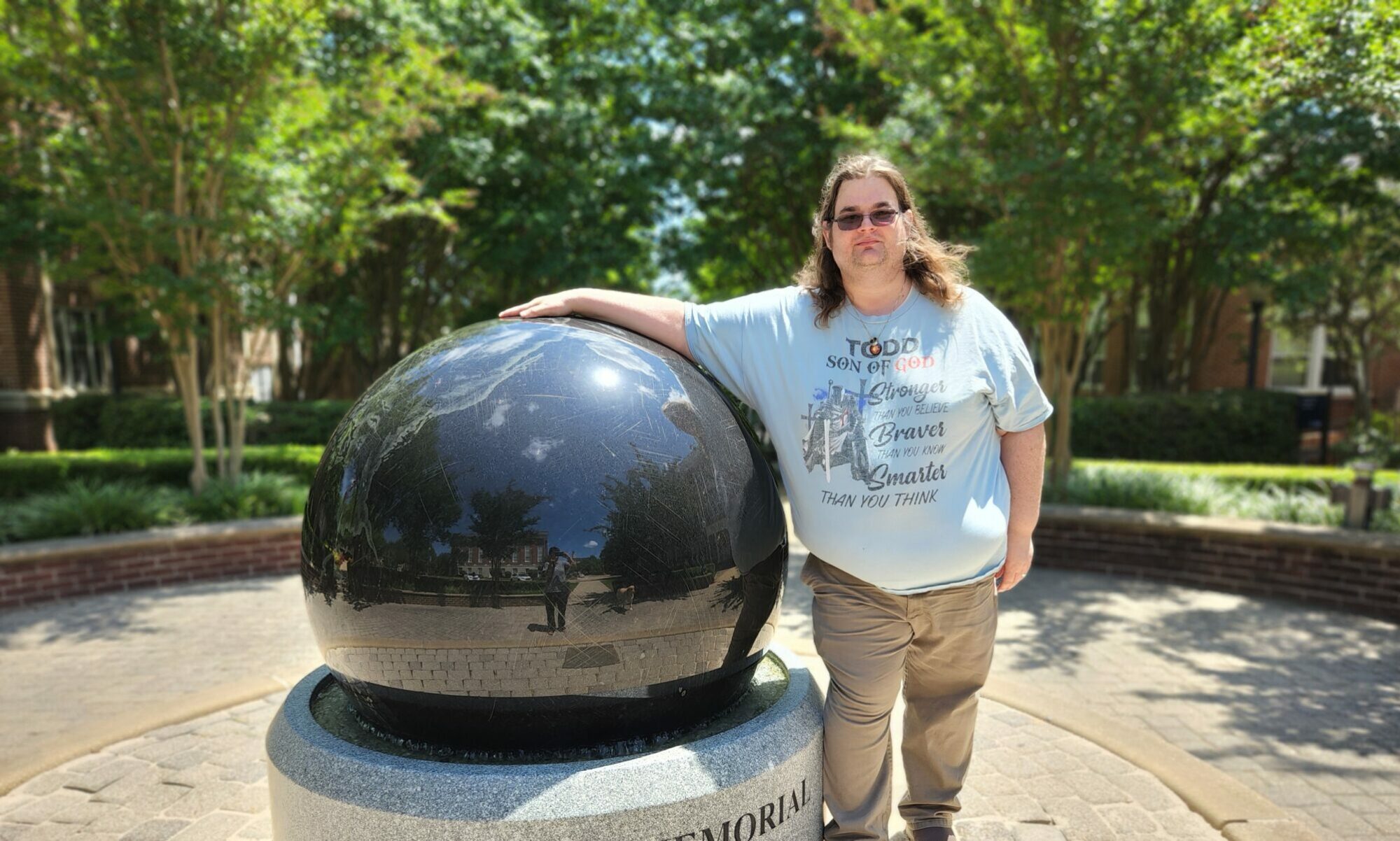

September 24, 2026
Yesterday, September 23, marked exactly 100 years since the death of Paul Kammerer.
That part isn’t my interpretation. Kammerer, the Austrian experimental biologist whose controversial career became inseparable from questions of coincidence, inheritance, and what he called the Law of Seriality, died on September 23, 1926, on the Hochschneeberg near Vienna. Contemporary Nature accounts recorded his death, and, fittingly, Nature published a new essay this month reconsidering Kammerer and his work a century later. Nature
What follows isn’t science in that same sense. It’s a record of the strange personal associations that happened to converge for me on his centennial.
The Rabbi and the Oil
On August 18, 2025, I was driving back from Miami after dropping off someone I have referred to in my writing as the “masculine Neo.”
I stopped at a Love’s in Lee, Florida. According to the location and date recorded by my phone, that’s where I took the photograph accompanying this story.
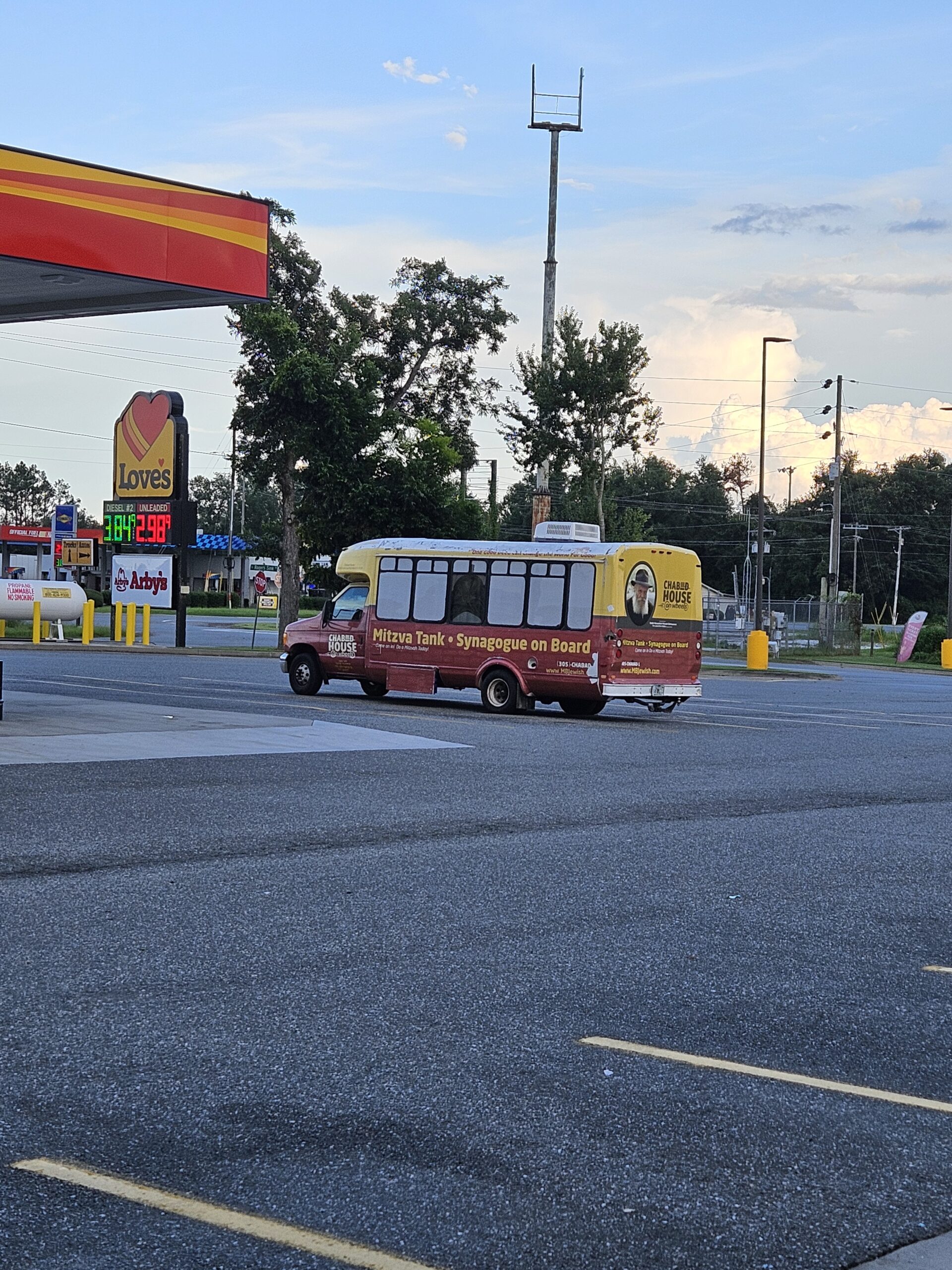
At that Love’s, a Jewish man—a rabbi, as I understood him—walked in at essentially the same time I did.
I went in for the ordinary reasons: bathroom, something to drink, back on the road.
He was looking for oil.
It was an insignificant encounter by normal standards. Two strangers at a truck stop, each continuing down his own road.
But the oil stuck in my mind.
The Fleur-de-Lis Echo
When I returned to my job at the Fleur-de-Lis, oil became part of my routine in a completely different form: changing the fryer oil.
The fleur-de-lis itself isn’t literally a recursive or fractal flower. It’s a stylized, symmetrical floral emblem. But visually, its forms repeat and echo one another.
“Echo” is probably the better word for what I was experiencing anyway.
The man asking for oil in Florida echoed into me handling oil in Mississippi.
For months, changing those fryers developed a personal, almost ritual significance. I sometimes thought of the physical labor as my way of keeping that coincidence alive—doing the dirty work at the other end of an association that had begun hundreds of miles away.
I can’t demonstrate that those events had any external connection. I can only describe the meaning I gave them.
There was essentially one interruption in that routine before I entered rehab: a week when I had what appeared to be pink eye.
And then there was March 1, 2026.
I photographed one of the fryers filled with unusually pale, opaque oil. The appearance was memorable enough that I described it much more crudely at the time: it looked like semen.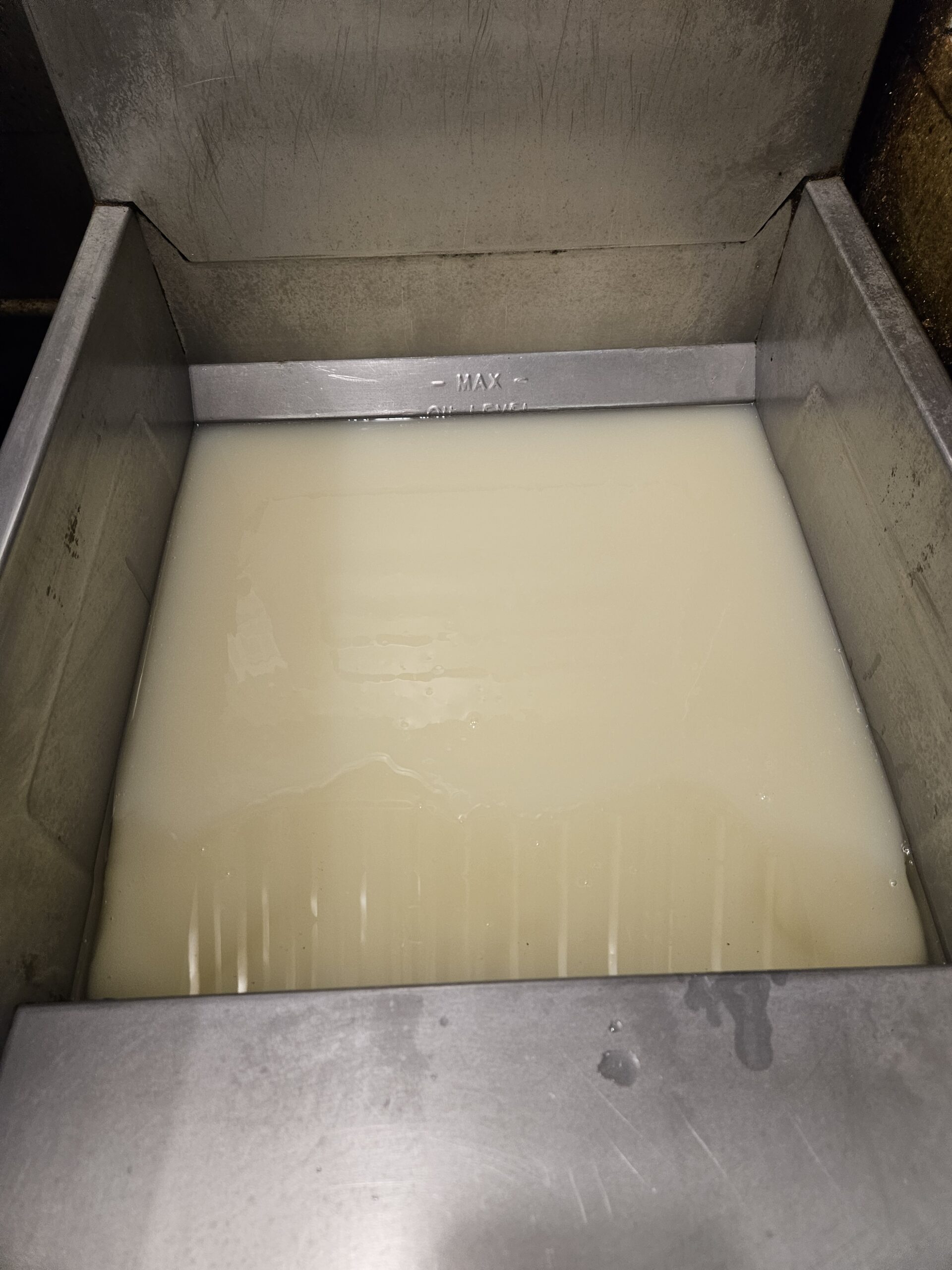
That photograph became another timestamp in the story I was constructing around oil, labor, politics, and coincidence.
After Rehab, the Meaning Changed
When I came out of rehab, my willingness to continue this little ritual had diminished considerably.
Part of that change eventually became political and moral.
The recent controversy surrounding Macklemore and Ed Sheeran’s tour pushed Palestine further into my thinking. Macklemore publicly said “Free Palestine” during performances opening for Sheeran and was subsequently removed from the remaining U.S. dates after venues objected to his participation. Macklemore has maintained that supporting Palestinian rights is not hostility toward Jewish people and subsequently pledged $1 million toward Palestinian aid. Reuters
My own position needs the same distinction.
My objection isn’t to Jewish people. It is to actions of the Israeli government that I have come to regard as profoundly immoral—what I would describe, in my own religious language, as satanic.
That’s a moral and spiritual judgment of governmental conduct, not a statement about Judaism or Jewish people.
And all of that made my old symbolism surrounding a Jewish stranger asking for oil considerably more complicated.
September 23, 2026
Then came yesterday.
The 100th anniversary of Paul Kammerer’s death.
I didn’t particularly want to change the fryer oil.
But the head cook at the Fleur-de-Lis asked me to.
She’s someone I privately think of as a possible “feminine Neo” candidate within the symbolic framework I’ve been developing in these writings. That’s my interpretation of her significance, not an objective claim about who or what she is.
And that distinction matters because, frankly, if somebody else had asked me to change those fryers, I probably wouldn’t have done it.
But she asked.
I give her enough symbolic weight in my own story that the identity of the person making the request changed my answer.
There was also the practical reality: there aren’t many people there willing to volunteer for the hardest, dirtiest jobs. Somebody needed to do it.
So I did.
And that’s where the centennial became interesting to me.
The Least Likely Thing
Of everything I might have imagined doing on the 100th anniversary of Paul Kammerer’s death, changing fryer oil at the Fleur-de-Lis in memory of a rabbi I happened to encounter at a Love’s in Lee, Florida, would have been somewhere near the bottom of the list.
By that point, I wasn’t even particularly motivated to continue the ritual.
Yet there I was.
The person who asked mattered to me. The work needed doing. And the date happened to be September 23.
For a man who spent so much of his life thinking about seriality, there is something almost comically appropriate about my remembering his centennial through an improbable chain of mundane things:
A road trip.
A truck stop.
A stranger.
Oil.
A fryer.
A flower whose shapes echo one another.
A cook asking for help.
And finally, 100 years to the day.
None of that proves that some hidden mechanism arranged these events. It doesn’t establish fate, simulation, divine intervention, or Kammerer’s seriality as a physical law.
But coincidence doesn’t have to prove something to become meaningful to the person experiencing it.
Kammerer spent part of his life asking why events sometimes seem to cluster into patterns that catch our attention.
A century after his death, I found myself doing the same thing.
Except I was standing over a fryer.
Transparency Note
This article was written with AI assistance to organize the author’s recollections, distinguish personal interpretation from externally verifiable facts, and fact-check historical and contemporary references. The experiences, symbolic interpretations, and conclusions described as the author’s are his own.