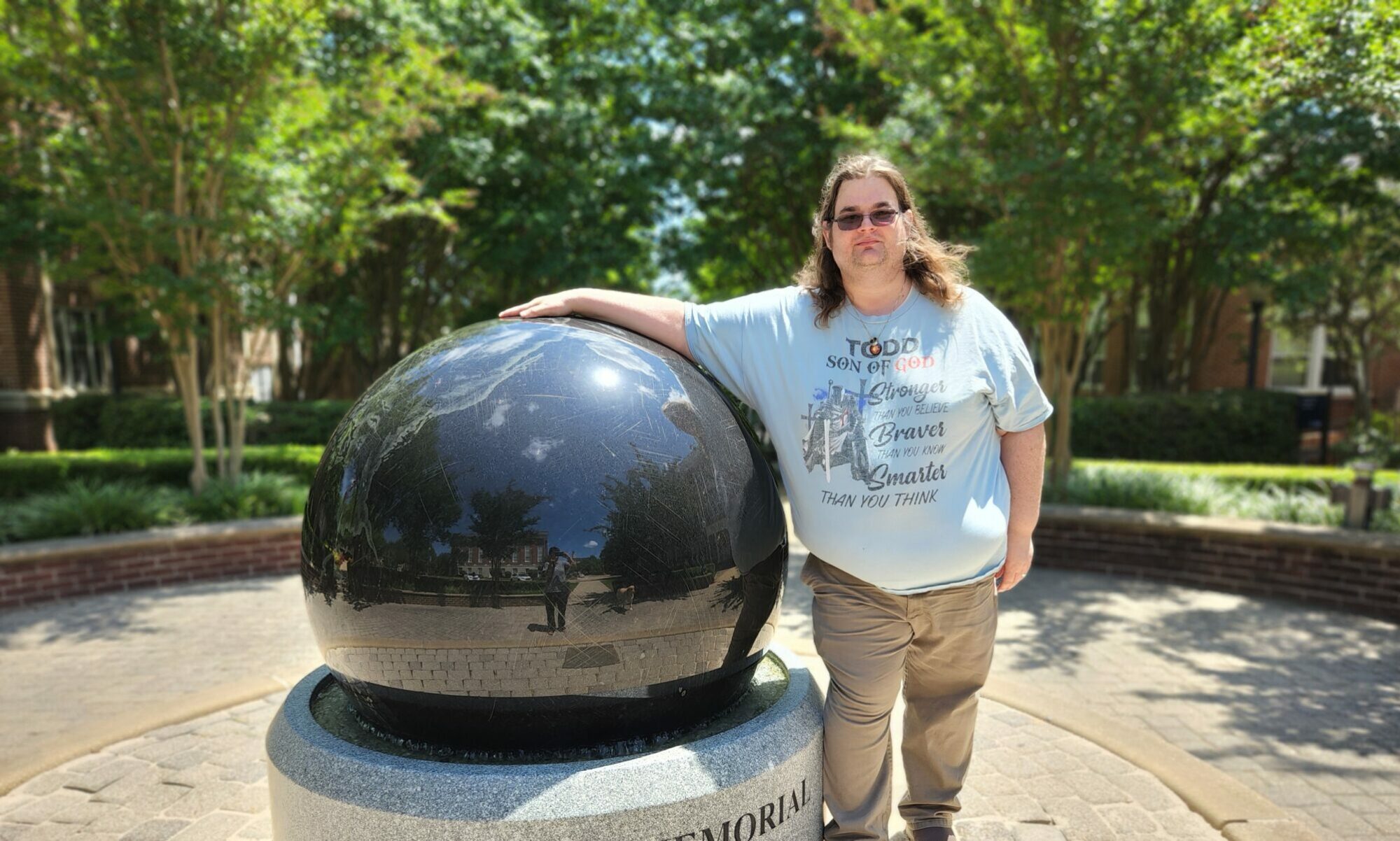
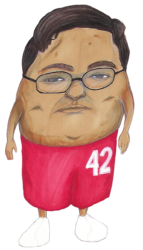
For someone living with gender dysphoria, identity can already feel like a hall of mirrors. There is the person I know myself to be, the person other people see, and then there are the strange reflections that sometimes catch my attention.
One of those reflections has been Todd Alan Reed.
And first, a fact-check matters here: his name is Todd Alan Reed—Alan with one L, Reed with two Es. He was born Todd Alan Thomas on May 22, 1967, in Portland, Oregon. After his mother remarried, he was adopted by Robert Reed and took the Reed surname. Reed became known as the Forest Park Killer after murdering three women whose bodies were left in Portland’s Forest Park in 1999. He received three life sentences without parole. Current sources describe him as born in 1967; I have not found reliable evidence establishing that he has died, so I am not assigning him a death date. Wikipedia
Why does any of that interest me?
Because I’m Todd Alan too.
I have also perceived a physical resemblance between Reed and myself. That resemblance is subjective—it isn’t something I can present as an objective fact—but it creates a striking doppelgänger image in the way I interpret my own story.
For me, however, the interesting part isn’t becoming the doppelgänger. It’s being the opposite of him.
Someone else sharing my first and middle names committed horrific acts. I get to decide what my Todd Alan does with his life. A name doesn’t make somebody good or evil. Neither does a resemblance. Actions do.
And that’s where the word serial gets interesting.
From Serial Killer to Seriality
Long before I encountered this particular coincidence, I became fascinated with Paul Kammerer’s concept of seriality: the idea of examining clusters of recurring events that appear related even when we cannot establish an ordinary causal connection between them.
So now look at the language:
Todd Alan Reed — serial killer.
Paul Kammerer — seriality.
Todd Alan — noticing the series.
That doesn’t establish a hidden mechanism connecting these things. That’s an important distinction. A pattern can be psychologically meaningful without demonstrating that the universe—or a simulation—is deliberately producing it.
But noticing the series is precisely what makes seriality interesting to me.
And then Mississippi supplies one more wonderfully appropriate echo.
Hotty Toddy
The University of Mississippi—Ole Miss—officially calls “Hotty Toddy” its rallying cry and signature greeting. That’s not my interpretation; that’s how the university itself describes it. The earliest documented printed version of the cheer appeared in the student newspaper in 1926 as “Heighty! Tighty!” before evolving into the familiar expression. Ole Miss
Hotty Toddy.
Todd.
Toddy.
Here I am in Mississippi, thinking about a Todd Alan doppelgänger, a serial killer, Paul Kammerer’s seriality, my own fascination with identifying series—and one of the most recognizable rallying cries in my home state is:
HOTTY TODDY.
I couldn’t have scripted the wordplay much better myself.
Does that prove we’re living in a simulation?
No.
Does it prove Ole Miss is somehow sending me a message?
No.
But does it make an awfully entertaining addition to the collection of linguistic coincidences I call seriality at the edge of the matrix?
Absolutely.
There is also something more important underneath all the wordplay.
Gender dysphoria has forced me to think seriously about what constitutes identity. Todd Alan Reed provides an extreme illustration of what identity isn’t. Sharing names, appearances, dates, words, or other coincidences doesn’t make two people the same person. Those similarities are surface information.
I still have to choose what kind of Todd Alan I am.
Maybe that’s the useful part of staring into all these mirrors. I don’t have to become the reflection.
I can decide what reflects back.
And somewhere up in Oxford, Mississippi, they’re still shouting:
HOTTY TODDY.
From where I’m standing, that’s one hell of a rallying cry for the edge of the matrix.
Transparency note: This essay was written with AI assistance. The connections involving seriality, doppelgängers, gender, and “the edge of the matrix” are my personal interpretations. Factual claims about Todd Alan Reed and Ole Miss were separately checked during drafting. Coincidences described here are presented as observations and interpretations, not as evidence of a causal or supernatural connection.